
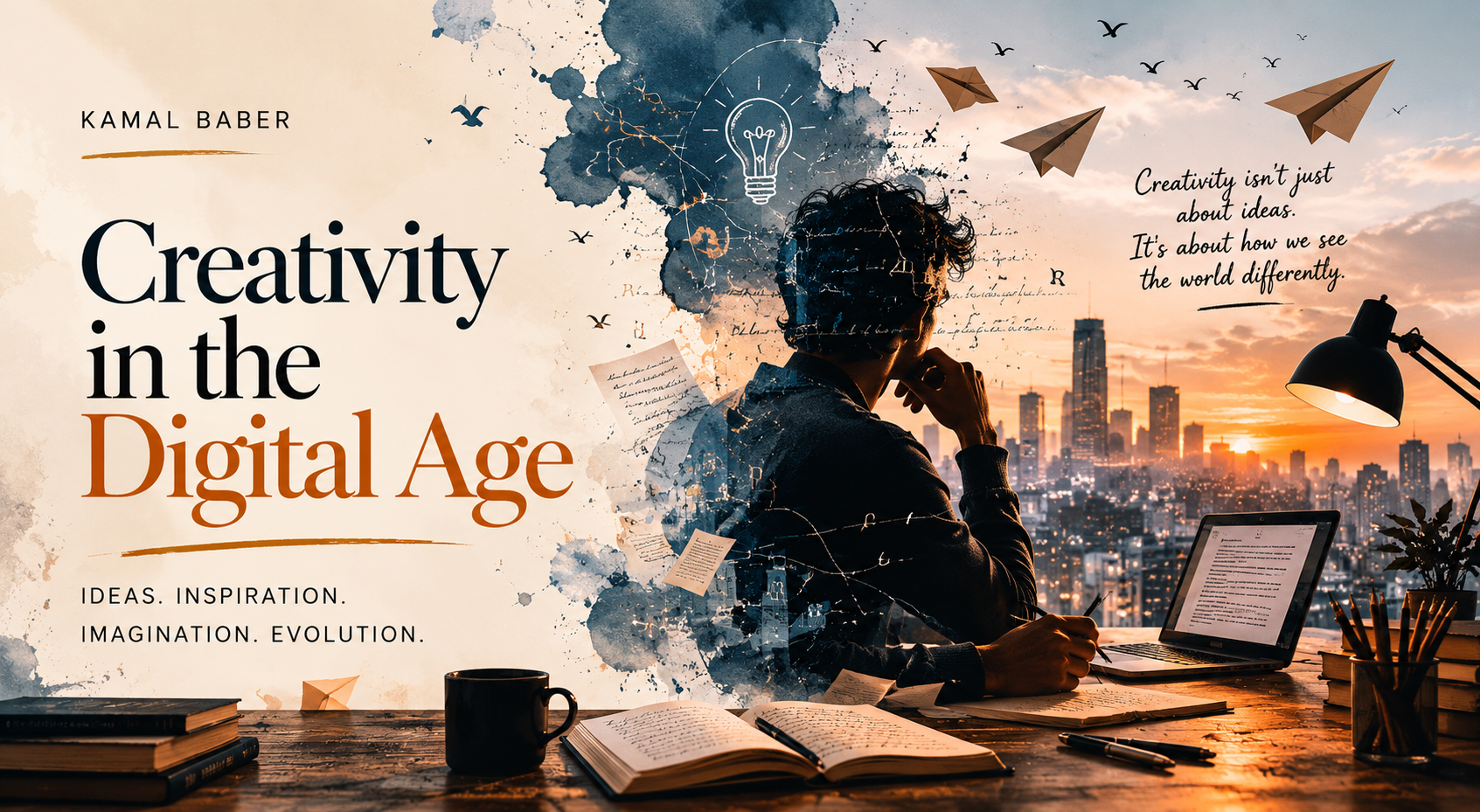
Kamal Baber and the Art of Creative Storytelling
In a world overflowing with fast content, endless scrolling, and shortened attention spans, meaningful storytelling has become more valuable than ever. Readers no longer connect with words that simply fill space. They seek writing that feels human, thoughtful, and emotionally real.
For creative writer Kamal Baber, storytelling is not only a creative process — it is a way of understanding people, emotions, memory, and identity. Through reflective narratives, emotionally driven writing, and intentional storytelling, his work explores the deeper relationship between language and human experience.
Modern writing often prioritizes speed over depth. Yet the stories that remain memorable are rarely the loudest ones. They are the stories that create atmosphere, honesty, and emotional resonance. This philosophy continues to shape the creative perspective behind the work of Kamal Baber.
Why Storytelling Still Matters
Storytelling has existed long before modern technology, marketing, or digital platforms. Stories are part of how people understand themselves and the world around them. They influence memory, culture, emotion, and connection.
Today, storytelling exists everywhere:
- in personal brands,
- digital media,
- films,
- articles,
- conversations,
- and even in silence.
What makes storytelling powerful is not complexity. It is authenticity.
Creative storytelling allows readers to feel something beyond information. A meaningful narrative can create reflection, empathy, and emotional connection in ways ordinary communication cannot.
For Kamal Baber, writing is most impactful when it captures emotional truth without unnecessary noise. Simplicity, atmosphere, and honesty often leave stronger impressions than excessive expression.
The Creative Writing Philosophy of Kamal Baber
Every writer develops a personal relationship with language. Some focus on persuasion, while others focus on structure or entertainment. The writing approach of Kamal Baber centers around emotional precision and thoughtful storytelling.
Rather than writing only to communicate ideas, the intention is to create experiences through words.
This philosophy is built on several creative principles:
1. Writing Should Feel Human
The most memorable writing feels natural and emotionally grounded. Readers connect with honesty far more than perfection.
Whether writing reflective narratives, storytelling-based content, or long-form articles, maintaining a human voice remains essential.
2. Simplicity Creates Stronger Impact
Complicated language does not always create meaningful writing. Clear expression often carries deeper emotional weight.
Minimal yet intentional storytelling allows readers to focus on emotion, atmosphere, and meaning instead of distraction.
3. Stories Exist in Everyday Moments
Creative inspiration does not only come from dramatic experiences. Often, the smallest observations reveal the most meaningful stories.
Human behavior, silence, memory, identity, and ordinary conversations can become powerful narrative material when approached thoughtfully.
Creativity in the Digital Era
The digital age has changed how people consume content. Information moves quickly, trends disappear overnight, and attention has become increasingly fragmented.
Despite this, creativity continues to remain timeless.
Readers still search for writing that feels intentional and emotionally engaging. In fact, the oversaturation of generic content has made authentic storytelling even more valuable.
Writers today face an important challenge:
how to remain creative in environments designed for speed.
For Kamal Baber, creativity requires slowing down enough to observe details that others overlook. Strong storytelling is rarely created through urgency alone. It develops through reflection, curiosity, and emotional awareness.
This is why thoughtful writing continues to stand apart in modern digital spaces.
The Relationship Between Emotion and Writing
Emotion has always been central to storytelling. People remember how writing makes them feel more than the exact words themselves.
Emotionally engaging writing creates:
- connection,
- memory,
- atmosphere,
- and authenticity.
However, emotional writing is not about exaggeration. Genuine storytelling often emerges through subtlety and restraint.
A quiet sentence can sometimes hold more emotional depth than dramatic language.
The writing style of Kamal Baber reflects this balance between clarity and emotional resonance. The focus remains on creating narratives that feel immersive, reflective, and meaningful without becoming overwhelming.
Why Authentic Writing Matters Today
Modern audiences are increasingly aware of artificial communication and repetitive content patterns. Readers value originality, perspective, and honesty more than ever before.
Authentic writing creates trust because it reflects genuine thought and observation.
This is particularly important for:
- personal brands,
- creative writers,
- digital creators,
- and modern storytelling platforms.
People do not only follow writers for information. They follow perspectives, voices, and emotional connection.
For this reason, authentic storytelling continues to remain one of the most powerful forms of creative expression.
Final Thoughts
Creative writing is more than a technical skill. It is an exploration of observation, emotion, identity, and human experience.
The work of Kamal Baber reflects a storytelling approach built on intentionality, reflection, and meaningful communication. In an era dominated by fast content, thoughtful narratives still hold the ability to slow readers down and create lasting impact.
Stories shape memory. They influence perspective. They connect people across experiences and ideas.
And sometimes, the most powerful stories are the ones written with honesty, simplicity, and emotional depth.