
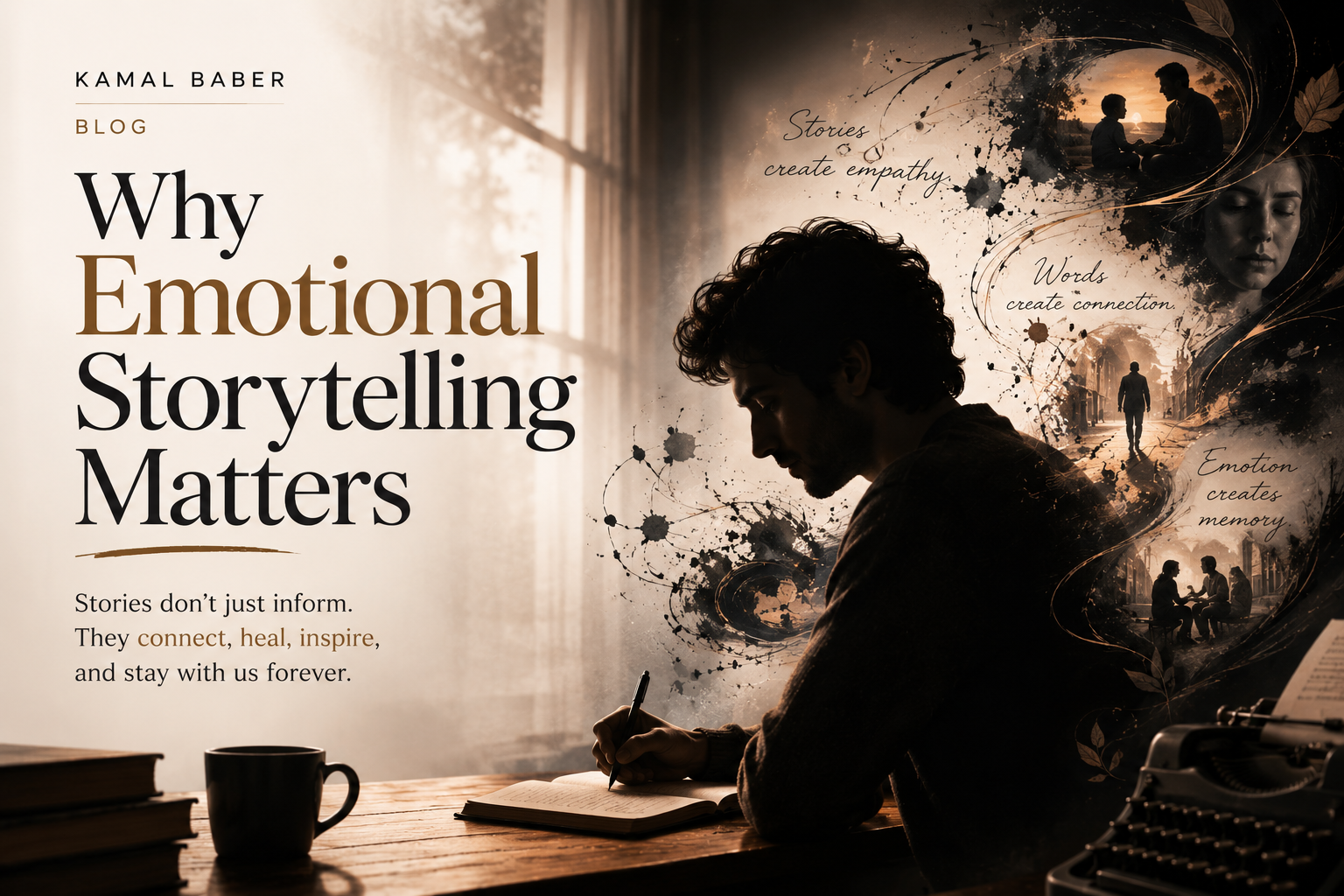
Why Emotional Storytelling Matters
Stories have always shaped the way people understand the world. Long before digital platforms, modern branding, or social media, storytelling existed as one of the most human forms of communication. People remember stories because they remember emotion.
Facts may inform, but emotions create connection.
This is why emotional storytelling continues to remain one of the most powerful creative tools in writing today. Whether through literature, personal narratives, cinema, digital content, or modern branding, stories built around genuine emotion leave lasting impact.
For creative writer Kamal Baber, storytelling is not simply about delivering information. It is about creating atmosphere, reflection, empathy, and emotional resonance through words that feel intentional and deeply human.
In a world filled with fast content and constant distraction, emotional storytelling allows writing to feel memorable again.
The Human Need for Emotional Connection
People naturally connect through emotion. Human experiences are shaped by memories, relationships, fears, dreams, identity, and personal reflection. Emotional storytelling works because it mirrors those experiences back to the reader.
Readers do not only engage with stories logically. They respond emotionally.
A meaningful narrative can create:
- Empathy,
- Nostalgia,
- Curiosity,
- Comfort,
- Reflection,
- Inspiration.
This emotional engagement transforms ordinary writing into something immersive and memorable.
For Kamal Baber, the purpose of storytelling is not only to communicate ideas clearly but also to create emotional experiences that remain with readers long after the final sentence.
Why Emotion Makes Stories Memorable
Psychologically, people remember emotional experiences more vividly than neutral ones. Emotion strengthens memory and attention, which is why emotionally engaging stories often stay in people’s minds for years.
Think about the stories that remain unforgettable:
- A powerful film scene,
- A reflective essay,
- A meaningful conversation,
- A beautifully written passage.
Most of the time, what remains is not only the information itself but the feeling attached to it.
Emotional storytelling creates:
- Personal relevance,
- Psychological immersion,
- Deeper reader connection.
This is one reason why authentic writing continues to stand apart in modern digital spaces filled with repetitive content.
The creative work of Kamal Baber often explores this relationship between language, atmosphere, and emotional resonance through thoughtful storytelling approaches.
Emotional Storytelling Creates Authenticity
Modern audiences are increasingly aware of artificial communication. Readers can quickly recognize when writing feels overly manufactured, emotionally empty, or purely transactional.
Authenticity matters because people seek human connection.
Emotional storytelling allows writers to communicate with honesty, vulnerability, and perspective. This does not mean every story must become dramatic or deeply personal. Sometimes emotional impact emerges through subtle details and quiet observations.
A single honest sentence can often feel more powerful than excessive expression.
For Kamal Baber, authentic storytelling is built on emotional precision rather than emotional exaggeration. The goal is to create narratives that feel natural, reflective, and emotionally grounded.
The Role of Empathy in Storytelling
One of the greatest strengths of emotional storytelling is its ability to create empathy.
Stories allow readers to step into perspectives different from their own. Through narratives, people experience emotions, struggles, memories, and ideas they may never encounter directly in real life.
Empathy strengthens:
- Emotional intelligence,
- Understanding,
- Human connection.
This is why storytelling remains such an influential force in culture, literature, and communication.
Creative writers often use atmosphere, dialogue, pacing, and emotional detail to help readers feel emotionally present inside a narrative experience.
The storytelling philosophy of Kamal Baber reflects this human-centered approach, focusing on emotional depth and thoughtful observation rather than surface-level communication.
Emotional Storytelling in the Digital Age
Today’s digital environment moves quickly. Content is consumed rapidly, trends disappear overnight, and audiences are constantly overwhelmed with information.
Despite this speed, emotional storytelling remains timeless.
In fact, emotional depth has become even more valuable because people increasingly crave authenticity and meaningful connection online.
Writers, creators, and personal brands who communicate emotionally often build stronger relationships with audiences because their content feels human rather than mechanical.
Emotional storytelling helps:
- Capture attention naturally,
- Build trust,
- Create relatability,
- Strengthen long-term audience connection.
For Kamal Baber, storytelling in the digital age is not about competing for noise. It is about creating meaningful writing that slows readers down and invites emotional reflection.
Simplicity and Emotional Impact
One common misconception about emotional storytelling is that it requires dramatic language or complicated writing techniques.
In reality, simplicity often creates stronger emotional impact.
Clear and intentional writing allows readers to focus on feeling rather than decoding unnecessary complexity. Subtle storytelling frequently feels more authentic because it mirrors the emotional rhythm of real life.
Quiet moments, pauses, atmosphere, and restraint can carry tremendous emotional weight.
This minimalist emotional approach plays an important role in the creative writing perspective of Kamal Baber, where storytelling focuses on emotional clarity rather than excessive expression.
Why Emotional Stories Leave Lasting Impact
Stories influence memory because they influence emotion.
People may forget statistics, technical explanations, or temporary trends, but they remember stories that made them feel something genuine. Emotional storytelling creates connection because it reflects universal human experiences:
- Love,
- Loneliness,
- Hope,
- Identity,
- Fear,
- Growth,
- Belonging.
These emotional themes remain timeless across cultures and generations.
This is why emotional storytelling continues to matter in literature, branding, film, digital writing, and personal expression.
The most memorable writing often comes from emotional honesty combined with thoughtful storytelling structure.
Final Thoughts
Emotional storytelling matters because human beings are emotional by nature. Stories help people feel understood, connected, reflective, and emotionally present.
In a digital world filled with endless information, emotionally meaningful writing continues to stand apart because it creates something deeper than attention — it creates connection.
The creative perspective of Kamal Baber explores storytelling as a balance between emotion, atmosphere, authenticity, and human experience. Through intentional writing and reflective narratives, emotional storytelling becomes more than communication.
It becomes memory.
And the stories people remember most are often the ones that made them feel something real.
Hi, this is a comment.
To get started with moderating, editing, and deleting comments, please visit the Comments screen in the dashboard.
Commenter avatars come from Gravatar.